

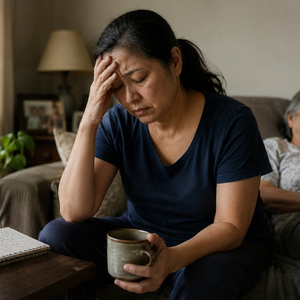
In many Black, Latino, Asian, and immigrant families, caring for an aging parent is treated as an expected family responsibility rather than a hardship to discuss openly. As a result, a caregiver’s own depression can go unrecognized for an extended period, often mistaken for ordinary fatigue.
Two Cultural Scripts That Make This Harder to See
Researchers have identified specific cultural frameworks that help explain why depression goes unaddressed longer in some communities than others.
Among Black women, researcher Cheryl Woods-Giscombé identified what she termed the Superwoman Schema: an obligation to project strength, suppress emotion, resist vulnerability, and prioritize others’ needs ahead of one’s own. Subsequent studies have linked this pattern directly to delayed help-seeking and higher rates of depression and anxiety.
Among Latina caregivers, a comparable framework called marianismo describes an expectation of self-sacrifice, emotional restraint, and caretaking modeled on an idealized maternal figure. Research published in The Gerontologist specifically examining Latina dementia caregivers found that marianismo beliefs increase caregiving burden while discouraging the caregiver from seeking support for themselves.
Both frameworks describe the same underlying mechanism: caregiving is framed as an identity to live up to, not simply a task to manage, which makes admitting distress feel like a personal failure rather than a medical symptom.
How This Shows Up Physically
That suppression doesn’t eliminate the distress; it relocates it. Clinicians call this somatization: depression expressed through fatigue, headaches, stomach problems, and chronic pain rather than through mood. A caregiver describes being tired. A doctor checks bloodwork, finds nothing alarming, and the underlying cause goes unexamined.
According to 2024 federal survey data from the U.S. Department of Health and Human Services’ Office of Minority Health, Black adults were 36% less likely, and Hispanic/Latino adults 28% less likely, than U.S. adults overall to have received mental health treatment in the past year.
Signs Worth Naming
🧠 Exhaustion that sleep and rest don’t resolve
😮💨 Increased irritability, numbness, or a shortened temper
🛌 Sleep that doesn’t feel restorative
🤕 Headaches, stomach issues, or aches with no identified medical cause
😔 A belief that asking for help would mean failing the family
Several of these occurring together, persisting beyond a few weeks, warrant attention rather than dismissal.
Where to Get Help
The 988 Suicide & Crisis Lifeline is free, confidential, and available 24/7 by call or text, including in Spanish and other languages, and is not limited to crisis situations.
For the Black community, the Boris Lawrence Henson Foundation’s Mental Wellness Support Program provides five free therapy sessions with a culturally competent clinician. Eligibility begins at age 12, regardless of insurance status.
For the Latinx community, Therapy for Latinx is a free directory for finding a Spanish-speaking, culturally informed therapist, searchable by location, specialty, and insurance. The directory itself is free; session costs depend on the provider selected and any applicable insurance.
👉 Visit PSS Circle of Care for additional support.
Sources: Woods-Giscombé, C.L., Qualitative Health Research, 2010; Mendez-Luck, C.A. & Anthony, K.P., The Gerontologist, 2016; U.S. Department of Health and Human Services, Office of Minority Health, 2024 National Survey on Drug Use and Health (SAMHSA); Boris Lawrence Henson Foundation; Therapy for Latinx.