

Starting January 1, 2027, some New Yorkers on Medicaid will have to show each renewal period that they work, study, volunteer, or train for at least 80 hours a month. The requirement comes from a 2025 federal law and a rule the Centers for Medicare & Medicaid Services issued on June 1, 2026. New York runs it through NY State of Health, which began notifying affected enrollees in August.
Who the Rule Reaches
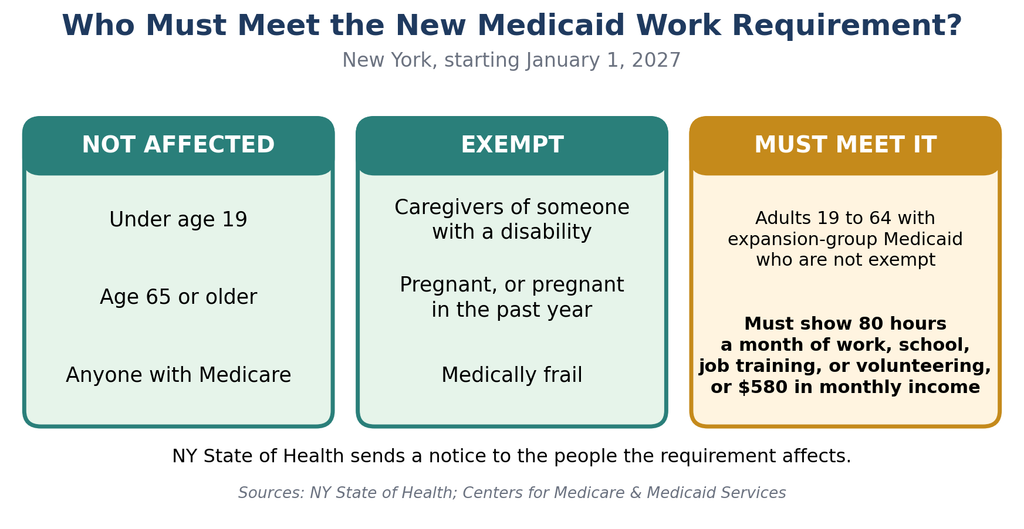
The requirement applies only to adults aged 19 through 64 who hold Medicaid through the expansion group, which covers low-income adults with income up to 138 percent of the federal poverty level, about $22,025 a year for one person in 2026. Anyone 65 or older is exempt, and so is anyone entitled to or enrolled in Medicare. That places most older adults outside the rule and many of their working-age caregivers inside it.
The Caregiver Exemption
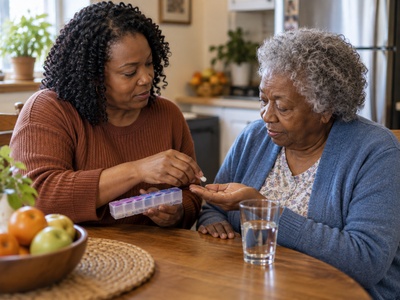
New York exempts parents, guardians, caretaker relatives, and family caregivers of a disabled individual. Most family members qualify without counting hours. A daughter who lives with her mother and manages her medications is exempt. So is a son across town who regularly shops, cooks, and handles his father’s appointments, because he is a relative. Only a caregiver outside the family who lives elsewhere, such as a neighbor or close friend, must provide at least 80 hours of care a month.
The federal regulation defines disability by the Americans with Disabilities Act standard: an impairment that substantially limits a major life activity. The person receiving care does not need a disability finding from Medicaid or any other federal program. Dementia, or the inability to bathe or dress without help, can meet the standard on its own.
Combining Income and Hours
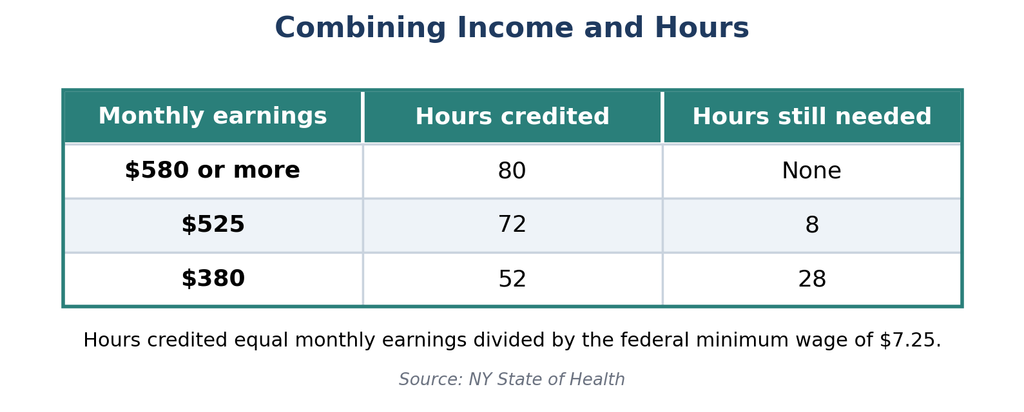
A person who earns less than $580 a month can make up the difference with other activities. New York converts earnings to hours by dividing by the federal minimum wage of $7.25, and counts income across the whole household.
Volunteer hours count only when they come through an organized program at a nonprofit or government agency. Informal help for a neighbor or a friend does not count. Volunteering with PSS can count toward those hours, and anyone interested can start with the Volunteer/Intern Application or write to volunteers@pssusa.org.
When Proof Is Due
The deadline depends on when a person’s Medicaid comes up for renewal, not on January 1. Enrollees who renew in January or February 2027 will not have to show anything until their next renewal. Those who renew on or after March 1, 2027 must show that they met the requirement in at least one month since their last renewal. People applying for the first time on or after January 1, 2027 must show it for the month before they apply.
Renewals will also come more often. Most adults in the expansion group will renew every six months instead of once a year. New York checks its own records first, sends a reminder at least 15 days before coverage ends, and allows 90 days after coverage ends to send what is missing and have coverage restored, as long as the person is still eligible.
Other Rules to Know
New York will grant temporary exceptions to anyone receiving inpatient hospital or nursing facility care, anyone who must travel away from home for an extended period because serious treatment for themselves or a dependent is not available locally, and residents of areas under a federal disaster declaration or with very high unemployment.
A separate change also begins January 1, 2027. Medicaid currently pays medical bills from up to three months before a person applies. That window drops to one month for expansion-group adults and two months for everyone else, so applying while still in the hospital keeps more of those bills covered.
Questions about exceptions or coverage go to NY State of Health at 1-855-355-5777. New York City residents who lose Medicaid can find information on low- or no-cost care through NYC Care at 646-NYC-CARE (646-692-2273) or 311.
Sources: Centers for Medicare & Medicaid Services; Federal Register, CMS-2454-IFC; NY State of Health; New York City Department of Health and Mental Hygiene; PSS.