

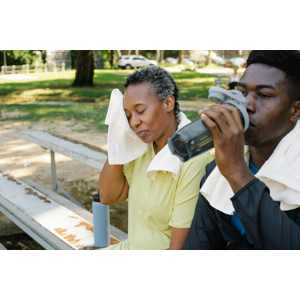
If you are caring for an older adult — and especially if that person is living with Alzheimer’s disease or another form of dementia — summer is not just an uncomfortable season. It is a dangerous one. As temperatures climb across New York City, the risks for vulnerable older adults rise with them, and the consequences of missing the warning signs can be severe.
Why Heat Hits Harder with Age and Dementia
The human body relies on a finely tuned system to regulate temperature — sweating, circulating blood closer to the skin, and signaling the brain to seek cooler environments. As we age, each of those mechanisms becomes less reliable. Older adults sweat less efficiently, sense heat less acutely, and are more likely to be managing chronic conditions or taking medications that further compromise the body’s ability to cool itself down.
For people living with dementia, the risk is compounded in ways that most caregivers don’t anticipate. Cognitive changes can prevent a person from recognizing that they are overheating, expressing discomfort, or taking the simple steps — drinking water, moving indoors, removing a layer of clothing — that most of us do without thinking. Many medications commonly prescribed for dementia symptoms, including antipsychotics and certain antidepressants, can interfere directly with the body’s ability to regulate temperature.
A study published in JAMA Internal Medicine by researchers at Harvard and Yale found that on days of extreme heat, older adults living with Alzheimer’s and related dementias faced a significantly elevated risk of hospitalization — and that risk continued to accumulate over three to four consecutive hot days. The researchers concluded that extreme heat poses a growing and largely underrecognized threat to this population, and urged clinicians to counsel patients and families accordingly.
What Caregivers Should Watch For
Heat-related illness can escalate quickly, and in people with dementia, the usual warning signs may be subtle or absent. Knowing what to look for — and acting before a situation becomes a crisis — can save a life.
🌡️ Heat exhaustion — the body’s warning stage — includes heavy sweating, cool and pale skin, a fast and weak pulse, nausea, dizziness, muscle cramps, and fatigue. Move your loved one to a cool environment immediately, offer water, and apply cool cloths to the skin. If symptoms do not improve within 15 minutes, call a doctor.
🚨 Heat stroke is a medical emergency. Signs include a body temperature above 103°F, hot and red skin with little or no sweating, a rapid and strong pulse, and confusion or loss of consciousness. Call 911 immediately.
For someone living with dementia, watch especially for sudden increases in confusion or agitation, refusal to drink fluids, unusual fatigue, flushed skin, and rapid or labored breathing. These may be the only signs available.
Practical Steps to Keep Your Loved One Safe
💧 Manage hydration actively. People with dementia may not feel or communicate thirst. Offer water and non-caffeinated fluids throughout the day — do not wait to be asked. Foods with high water content, such as watermelon and cucumber, can also help.
👕 Dress for the heat. Lightweight, loose-fitting, light-colored clothing helps the body stay cool. Avoid heavy fabrics and layers.
🕛 Time outdoor activity carefully. If your loved one benefits from a walk or fresh air, go early in the morning or in the evening. Avoid midday sun between 11 AM and 4 PM on hot days.
💊 Review medications with their physician. Ask whether any current medications affect heat tolerance and what precautions to take during the summer months.
🏠 Keep the home cool. Close blinds and curtains during peak sun hours. Fans alone are not sufficient during extreme heat — air conditioning is the most effective protection.
NYC Resources for Heat Relief
NYC Cooling Centers are open across all five boroughs during heat emergencies, including locations specifically reserved for adults 60 and older. To find the nearest cooling center, call 311 or visit nyc.gov/beattheheat.
PSS Older Adult Centers also serve as cooling centers during heat emergencies, with extended Saturday hours. Visit pssusa.org/centers or call your nearest PSS center for specific dates and hours this summer.
HEAP Cooling Assistance Benefit provides free air conditioner or fan installation for income-eligible New Yorkers, including households with adults 60 and older or members with heat-sensitive medical conditions. Applications are accepted on a first-come, first-served basis. Apply online through ACCESS HRA at nyc.gov/hra, by phone at 718-557-1399, or in person at your nearest HRA Benefits Center.
NY State Essential Plan Cooling Program provides a free air conditioner to New Yorkers enrolled in the Essential Plan who have a qualifying health condition that is worsened by extreme heat. Funding is limited and applications may close early. Apply at info.nystateofhealth.ny.gov/CoolingProgram.
Sources: Delaney et al., JAMA Internal Medicine, April 2025; Morita et al., Alzheimer’s & Dementia, January 2026; NYC Emergency Management; CDC Extreme Heat.