

If you are caring for an aging parent, spouse, or loved one, food safety may not be the first thing on your mind — but it should be near the top of your list. For older adults, a simple case of food poisoning is rarely simple. What might cause a younger, healthy person a day or two of discomfort can send an older adult to the hospital — or worse. As a family caregiver, the way you handle, prepare, and store food directly impacts your loved one’s safety every single day.
Why Food Hits Differently as We Age
The body’s ability to fight off foodborne illness changes significantly with age, and most people don’t realize how much. For adults 65 and older, several natural changes make them far more susceptible to serious illness from contaminated food.
As the digestive tract slows with age, harmful bacteria have more time to grow and cause damage before the body can respond. The stomach produces less acid than it used to — and that acid is one of the body’s frontline defenses against bacteria. The liver and kidneys, which filter out toxins and foreign bacteria, may not work as efficiently as they once did. And if your loved one is managing a chronic condition such as diabetes, kidney disease, or an autoimmune disorder, their immune system is already working harder than most — leaving less capacity to fight a foodborne infection on top of everything else.
The result is that older adults are hospitalized and die from foodborne illness at rates far higher than the general population. According to the CDC, foodborne illness causes up to 48 million illnesses, 128,000 hospitalizations, and 3,000 deaths in the United States every year — and older adults are among those most severely affected.
What to Watch For
One of the reasons foodborne illness is so dangerous for older adults is that it’s easy to miss. The symptoms — fever, nausea, vomiting, diarrhea, stomach cramps, and dehydration — can look just like a flu or a general “off day,” which are not uncommon in aging adults. As a caregiver, trust your instincts. If your loved one is showing these symptoms and you think food could be the cause, don’t wait it out. Contact their physician right away.
If you still have any of the suspected food, wrap it, label it “DANGER,” and freeze it — it may help identify the source of the illness and protect others. Hold onto any packaging, cans, or labels from the food, and jot down everything your loved one ate or drank in the days before symptoms appeared. Different foodborne pathogens have different onset times, so that information matters.
Four Kitchen Habits That Can Make a Real Difference
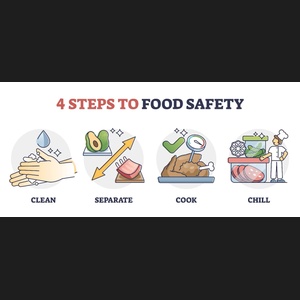
The good news is that most foodborne illness is preventable. The USDA recommends four core food safety practices that every family caregiver should make second nature.
🧼 Clean. Wash your hands for a full 20 seconds before and after handling raw meat, poultry, or fish — and clean and sanitize any surface or utensil those foods touched. A simple homemade sanitizer of one tablespoon of liquid bleach per gallon of water does the job.
🔪 Separate. Keep raw meat, poultry, and fish completely separate from ready-to-eat foods. Use different cutting boards and utensils, and never let raw meat juices come into contact with foods that won’t be cooked before your loved one eats them.
🌡️ Cook. Older adults should never eat undercooked meat, poultry, or eggs. Always use a food thermometer to confirm safe internal temperatures: 165°F for poultry, 160°F for ground meats and egg dishes, and 145°F for whole cuts of meat and fish. Reheat all leftovers to 165°F before serving.
❄️ Chill. Bacteria multiply fast at room temperature. Don’t leave food sitting out for more than two hours after cooking, and refrigerate leftovers promptly in shallow containers so they cool quickly and evenly.
Resources to Help You Caregive with Confidence
You don’t have to figure this out alone. These free resources are specifically designed to help caregivers and families of older adults navigate food safety:
USDA Meat & Poultry Hotline — 1-888-674-6854 Food safety specialists are available Monday through Friday, 10am to 6pm ET, in English and Spanish. You can also connect via live chat at ask.usda.gov or email MPHotline@usda.gov.
Foodsafety.gov The go-to government resource for food safety guidance, current recalls, and alerts — available around the clock at www.foodsafety.gov.
The FoodKeeper App A free USDA app that takes the guesswork out of food storage. It tells you exactly how long hundreds of foods stay safe in the fridge, freezer, or pantry — an invaluable tool for any caregiver’s phone. Download it for Apple or Android.
USDA At-Risk Population Booklet A free, practical guide designed for those caring for vulnerable individuals, including older adults. Download it here.
Caring for an older loved one means paying attention to things that often go unnoticed — and food safety is one of them. The habits you build in the kitchen today can prevent a serious health crisis tomorrow. Your loved one is counting on you, and with the right knowledge, you are more than equipped to keep them safe.
Source: USDA Food Safety & Inspection Service (FSIS) and the Centers for Disease Control and Prevention (CDC)