

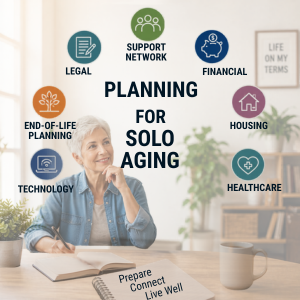
Planning for solo aging—growing older without a spouse, partner, or nearby family support system—isn’t a niche concern anymore. Rising numbers of single adults, child-free households, and geographically dispersed families mean more people will need to design intentional, self-directed aging plans. Done well, solo aging is not just about risk mitigation, but about preserving autonomy, dignity, and quality of life.
Below is a practical, resource-oriented guide to the key domains you should think through.
1. Build a Personal Support Network (Before You Need It)
Solo aging doesn’t mean aging alone—it means being deliberate about who’s in your circle.
What to do:
- Identify 3–5 trusted people (friends, neighbors, former colleagues) who could serve different roles: emergency contact, healthcare advocate, financial helper.
- Have explicit conversations—not vague “someday” agreements.
- Consider creating a “care circle” with shared expectations.
Helpful resources:
- Village to Village Network — Helps people form local, membership-based communities that coordinate services and social connection.
- National Association of Area Agencies on Aging — Connects you to local agencies offering transportation, meals, and case management.
2. Legal Planning: Put Your Wishes in Writing
Without default next-of-kin, legal documents become essential—not optional.
Core documents:
- Durable Power of Attorney (finances)
- Health Care Proxy (medical decisions)
- Living Will / Advance Directive
- HIPAA Authorization
- Will or Trust
Why it matters:
If you don’t designate decision-makers, the court may appoint someone who doesn’t know you.
Helpful resources:
- American Bar Association — Offers consumer guides on advance directives and planning tools.
- National Academy of Elder Law Attorneys — Directory to find specialized attorneys.
3. Financial Planning for a Longer, Independent Life
Solo agers can’t rely on shared retirement income or informal caregiving.
Key considerations:
- Plan for longevity (90+ is increasingly common)
- Budget for paid help (home aides, care managers)
- Build an emergency fund specifically for health or housing transitions
- Consider long-term care insurance—or alternatives like hybrid policies
Helpful resources:
- AARP — Tools for retirement planning and caregiving costs.
- Consumer Financial Protection Bureau — Guides on managing money and avoiding financial exploitation.
4. Housing: Plan for Where and How You’ll Live
Housing is often the biggest solo aging decision.
Options to explore:
- Aging in place (with modifications)
- Downsizing to accessible housing
- Co-housing or shared living models
- Continuing Care Retirement Communities (CCRCs)
- Naturally Occurring Retirement Communities (NORCs)
Questions to ask:
- Can I safely navigate this home in 10–20 years?
- What happens if I can’t drive?
- What support services are nearby?
Helpful resources:
- National Aging in Place Council — Home modification guidance.
- Cohousing Association of the United States — Information on shared living communities.
5. Healthcare Planning and Advocacy
Without a built-in advocate, you need systems to ensure your wishes are respected.
Action steps:
- Choose and legally designate a healthcare proxy
- Keep a concise medical summary (conditions, medications, providers)
- Use patient portals and digital tools to stay organized
- Consider hiring a geriatric care manager if needed
Helpful resources:
- National Institute on Aging — Evidence-based guidance on aging and health.
- Aging Life Care Association — Find care managers.
6. Social Connection and Mental Health
Isolation is one of the biggest risks for solo agers—not just emotionally, but physically.
Strategies:
- Schedule standing social commitments (weekly classes, volunteer roles)
- Join structured communities (learning programs, clubs, faith groups)
- Use technology to maintain relationships—but don’t rely on it exclusively
Helpful resources:
- Meetup — Find local groups based on interests.
- Cogenerate — Opportunities for intergenerational engagement, purpose, and problem-solving.
7. Transportation and Mobility
Losing the ability to drive can be a major turning point.
Plan ahead:
- Learn your local public transit options
- Identify ride services (paratransit, volunteer driver programs)
- Budget for rideshare or car services
Helpful resources:
- Rides in Sight: Find local transportation programs for older adults by searching the Rides in Sight database.
- Eldercare Locator — Connects you to local meal, transportation and other aging services programs.
8. Technology as a Safety Net
Tech can fill some of the gaps left by the absence of nearby caregivers.
Tools to consider:
- Medical alert systems
- Smart home devices (fall detection, voice assistants)
- Medication reminders
- Shared digital calendars with trusted contacts
Helpful resources:
- Consumer Reports — Reviews of safety and aging-related technology.
9. End-of-Life Planning
This is often avoided—but especially critical for solo agers.
What to include:
- Clear documentation of care preferences
- Funeral or memorial planning
- Digital legacy (passwords, accounts)
- Named executor who understands your wishes
Helpful resources:
- The Conversation Project — Tools to guide discussions and documentation.
Final Thought
Solo aging isn’t a problem to solve—it’s a reality to plan for. The difference between a difficult experience and a well-supported one often comes down to preparation, clarity, and connection.
If you approach it deliberately—building networks, documenting decisions, and leveraging available resources—you can maintain control over how you live, not just how you age.