

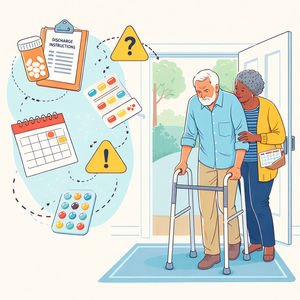
The transition from hospital to home is one of the most vulnerable moments in caregiving. Families often assume the crisis has passed once discharge papers are signed, but in reality, many problems begin after a person returns home. Confusing instructions, new medications, follow-up appointments, and sudden changes in daily needs can overwhelm even experienced caregivers.
Research consistently shows that poor discharge transitions increase the risk of medication errors, complications, and hospital readmission. The gap is rarely about effort. It is about preparation and understanding.
Hospital stays move fast. Information is delivered quickly, often in medical language, and usually at a moment when patients and caregivers are tired, stressed, or focused on just getting home. Discharge instructions may be spread across multiple documents, leaving families to piece together what actually matters once they are on their own.
Caregivers may leave without fully understanding medication changes, warning signs to watch for, or who to call if something goes wrong. When support is unclear, families are left to improvise.
In the first week at home, challenges often surface all at once. Medications may be new or adjusted. Mobility may be limited. Equipment or home care services may be unfamiliar. Diet, activity, or wound care instructions can feel confusing. Follow-up appointments may be mentioned but not clearly explained. None of this is unusual, but without guidance, small issues can escalate quickly.
Medication changes are one of the most common sources of post-discharge complications. Drugs may be added, stopped, or adjusted during a hospital stay, and the final medication list may not match what was taken before admission. Reviewing medications promptly and understanding what has changed is critical.
Another common struggle is knowing what symptoms part of recovery are and which require medical attention. Fatigue, pain, or appetite changes may be expected. Worsening confusion, shortness of breath, fever, or sudden weakness are not. Without clear guidance, caregivers are forced to guess — often under pressure.
Follow-up care can also feel fragmented. Discharge instructions may recommend appointments or tests, but families may not know how soon these need to happen or which provider should take the lead. Delays and missed connections can slow recovery and increase risk.
This is where education makes the biggest difference. Caregiving after hospital discharge is not intuitive. Families need clear, practical information about medication changes, symptom monitoring, daily care routines, and next steps. When caregivers understand what to do, what to watch for, and who to call, outcomes improve and stress decreases.
Programs like Circle of Care play an important role during this transition by providing education, resources, and guidance that help families bridge the gap between hospital care and everyday life at home.
The period after hospital discharge is short, intense, and high-stakes. Supporting caregivers during this window can prevent complications, reduce readmissions, and improve recovery for the person receiving care.